

‘Blockbuster’ Climate Case at Supreme Court
Air Date: Week of October 2, 2026
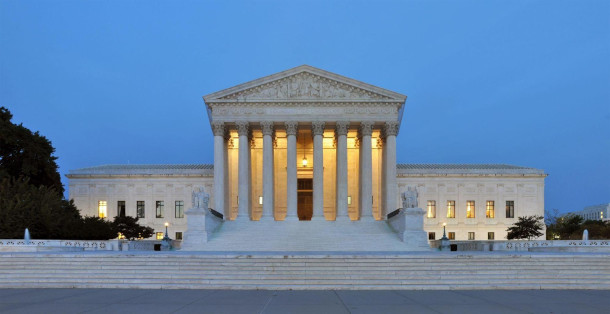
Oral arguments for Suncor Energy Inc. v. County Commissioners of Boulder County are scheduled for Monday, October 5, 2026, at the U.S. Supreme Court. (Picture: Joe Ravi, Wikimedia Commons, CC BY SA 3.0)
When the US Supreme Court set Monday, October 5th for oral arguments on an appeal from the Colorado State Supreme Court by Suncor and Exxon, it highlighted what could become a landmark case about damage from climate change and the role of fossil fuels. Patrick Parenteau, emeritus law professor at Vermont Law and Graduate school, speaks with Host Steve Curwood about why the case could make or break the ability of states and local governments to ‘make polluters pay.’
Transcript
DOERING: From PRX and the Jennifer and Ted Stanley Studios at the University of Massachusetts Boston, this is Living on Earth. I’m Jenni Doering
CURWOOD: And I’m Steve Curwood.
When the US Supreme Court set Monday, October 5th for oral arguments on an appeal from the Colorado State Supreme Court by Suncor and Exxon, it highlighted what could become a landmark case about damage from climate change and the role of fossil fuels. Adding to the Monday courtroom drama is the absence of Justice Samuel Alito, who recused himself just days before the session. Here to explain it all is Patrick Parenteau, emeritus law professor at Vermont Law and Graduate school. Welcome back, Pat.
PARENTEAU: Thanks, Steve. It's good to be with you.
CURWOOD: So, what is this Suncor case at the Supreme Court, and what's at stake for the environment, in your view?
PARENTEAU: Yeah. So, this is a blockbuster case on the court's docket for this term, and what it relates to is the ability of local governments, in this case, Boulder County and City of Boulder, Colorado, seeking compensation from major oil companies like Exxon and Suncor for climate damage, and the money that would be gained through lawsuits like this would be used to fund adaptation for the climate damages that are, of course, accelerating. In Boulder's case, it's wildfires and floods and drought, that sort of thing, and there are over two dozen of these cases pending across the country right now in state court. So the Supreme Court has finally decided to take up the question: Are all of these cases barred by federal law? So the stakes are billions of dollars, and what would happen if the oil companies succeed is all of that money would land on taxpayers all across the country. That's really what's at stake.
CURWOOD: And if it doesn't, of course, then the fossil fuel companies would have to pay, I gather.
PARENTEAU: That's right, and it's a fair share kind of liability calculation. You look at how much each one of these companies has contributed to global pollution, carbon dioxide, and other pollution, and you assign to them their individual share. So, in no way is this going to cover all of the costs of climate damage, not even close. But the question is: Are these companies going to be held accountable for any of it?
CURWOOD: Now, the city of Boulder brought the case in state court in Colorado. So, in essence, in part, to what extent is this case about the rights of states to protect their inhabitants if the federal government does not, because last time I looked, the federal government was not charging the fossil fuel companies for any damage they might have caused.
PARENTEAU: Well, that's correct. There's no federal law that would impose liability on these companies at all. So yes, it's in state court, and yes, it's a matter of state sovereignty. You know, a negative decision in this case would have far-ranging implications for the rights of states to protect their citizens from corporate malfeasance. That's what we're talking about. We'll get to it. Corporate lying, corporate deliberate actions that made the climate situation worse and that prevented states from preparing for it for many decades, right? That's what's at stake. So, if the court sides with the oil companies, they are siding against state sovereignty.
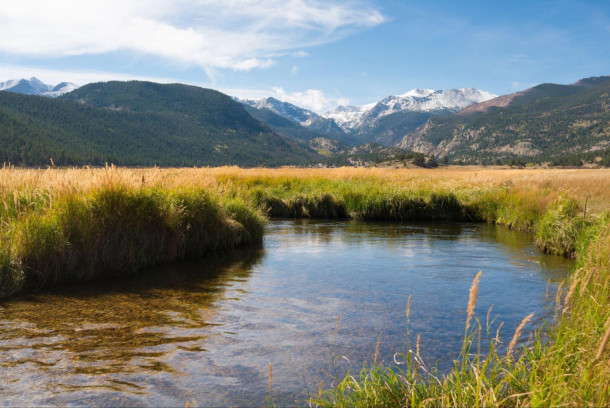
Moraine Park Valley in Rocky Mountain National Park, Colorado. Rocky Mountain National Park is a protected area partially within Boulder County, along with neighboring Larimer County and Grand County. In 2018, Boulder's city and county governments filed a lawsuit against ExxonMobil and Suncor Energy, alleging that fossil fuel companies misled the public about the climatic effects of their products. (Photo: Frank Schulenburg, Wikimedia Commons, CC BY SA 4.0)
CURWOOD: Now, back in 2023, the U.S. Supreme Court denied hearing an issue related to this case. How is the Supreme Court back in it this time, and what does it mean now that they have taken this up?
PARENTEAU: Well, it surprised a lot of us that they have previously refused to review these issues, most notably in the Hawai’i case out of Honolulu just a few years ago. And the Supreme Court technically doesn't even have jurisdiction at this point, to take up this case, and they've noted that as one of the questions that they have to deal with on October 5th, when the oral argument is going to occur in the court. You know, the court has actually said we're not sure we have jurisdiction to hear a case. There's no final judgment in this case. There may never be a final judgment. That's a long way away. A lot of the hurdles that the state has to overcome in the county of Boulder are formidable, right? Not least of which is can you actually prove that these companies did lie about what they knew about climate change, and did that actually result in the states and the counties not able to react in time to this, so there are a lot of hurdles to get to a final judgment, and there hasn't been one yet. So it is unusual, in fact, unprecedented, I would say, for the court to step into a case before it's even gone to trial.
CURWOOD: Wait a second, Pat, as I understand the folks in your profession, in a legal case, procedure can be and maybe is even more important than the facts of a case if the procedure is not being followed properly. In this case, the Supreme Court doesn't even know if it has the ability to take this case up. What's going on?
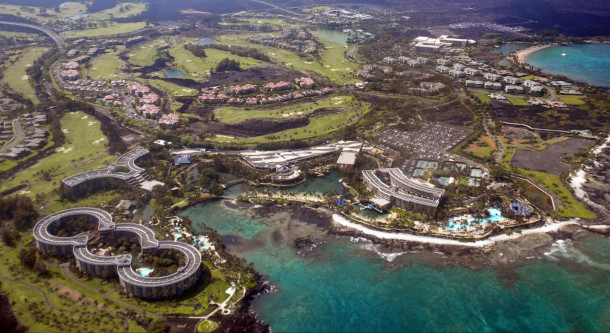
An aerial photo of the South Kohala coast on Hawai’i. Hawaii is involved in multiple climate change legal battles, including a climate accountability lawsuit that could be impacted by the U.S. Supreme Court's decision in Suncor Energy (U.S.A.) Inc. v. County Commissioners of Boulder County. (Photo: George, Wikimedia Commons, CC BY SA 3.0)
PARENTEAU: Yeah, I mean it is a puzzle, right? And it's obvious that something happened between the denial of review in Honolulu and granting review in the Boulder case, right? We don't know exactly what that was. We can guess as to why the court finally decided, well, maybe we should step in. One reason, of course, is the Trump administration, and they have reversed the position of the United States government under Biden, the Solicitor General, which was asked for her views on whether the court should take the case, said no, no, this case isn't ripe. It isn't ready for the court's review. And previously, the Supreme Court agreed with that position, so we know that a lot of pressure has been brought to bear on the court. There are over 70 amicus briefs, friend of the court briefs in this case. That's a record, okay. And everybody under the sun has a position on whether the case should be reviewed and whether the case should proceed to trial or not, and so I mean the Supreme Court is under tremendous pressure to step in, and maybe they will.
CURWOOD: So, when it comes to the arguments then, that are being planned for October 5th, what are going to be the principal questions asked then in that, that hour that's allowed to discuss a case like this?
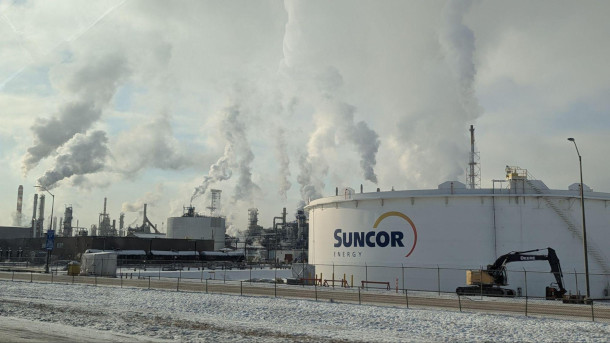
Pictured above is the Suncor Energy Edmonton Refinery which processes sands crude oil from northern Alberta. (Photo: Joli Rumi, Wikimedia Commons, CC BY-SA 4.0)
PARENTEAU: Yeah, so it's all about what we call federal preemption, whether federal law prevents the states from considering actions like this in state court. And there are two doctrines. I won't go into a long law school lecture here, I promise. But there are two basic doctrines of preemption: one, express preemption, that's where Congress has explicitly said in a statute like the Clean Air Act, which is at issue here, the states are preempted. And guess what? Congress did preempt the states when it came to motor vehicle pollution, right? Cars and trucks, except for California. There's what's called a California waiver, but otherwise, you know, the Congress knows how to preempt the states and did so in the Clean Air Act. But here's the thing: not for stationary sources like power plants and cement plants and oil and gas facilities and so forth. In fact, the Clean Air Act expressly preserves state law, preserves the right of states to pursue remedies under state common law, which is what Boulder is doing here, and you have an expression of Congress not to preempt the states. Now, the second ground of preemption is the one that I think is going to occupy most of the time, in the argument, and that is what we call implied preemption. How does that work? Number one, if state law conflicts with a federal law, well, that doesn't occur here. There's no conflict between what the Clean Air Act requires of industry. It requires it to install pollution control equipment and, and so forth. Nothing about what Boulder is seeking or the other states are seeking has anything to do with regulation of point sources of air pollution. Quite the contrary, it assumes that these point sources are going to continue putting carbon pollution to the atmosphere. It assumes that the oil companies are going to continue to produce oil and gas for some period of time, quite a bit of time actually. So no, there's no conflict with federal law. In truth, it's very hard to see where the court is going to find a precedent applying federal preemption to this particular case.
CURWOOD: You know, there is this time-honored tradition of you legal folks of reading the tea leaves at the Supreme Court. After these arguments, where do you think this particular court is going to come out? Given that Justice Samuel Alito has recused himself, and he has investments in fossil fuel companies, and likely would have supported the fossil fuel companies in this case.
PARENTEAU: Yeah, I think with Alito out, the chances for Boulder to get this case to trial have improved. I won't say it's going to be the difference in the case, that would be prejudging what the other justices are going to do, frankly. But with Alito out, you have a better working margin to get to the five votes you need to either decide we are not going to reach the merits in this case, or perhaps even we're going to decide in favor of Boulder getting to trial. Remember, the Colorado Supreme Court did not rule in favor of Boulder. It simply said you have alleged enough to get to trial, so that's really what's at issue right now in the case before the Supreme Court. Will you let this case go to trial or not? So we'll see what happens.
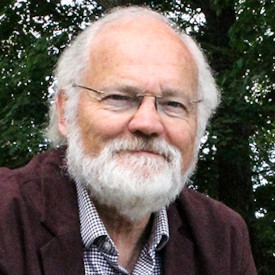
Pat Parenteau is a professor at Vermont Law and Graduate School. (Photo: Vermont Law and Graduate School)
CURWOOD: This all sounds very complicated, Pat. But what makes it so important?
PARENTEAU: Well, what makes it important is who's going to pay for these escalating damages from climate change in the multi-billion-dollar range all across the country, are you going to saddle all the communities of the United States with the full cost of paying for the damage that these companies have caused? I mean, regardless of how you feel about the need for fossil fuels, okay, the truth is, undeniably, it's their products that have brought us to this situation, and if the states are successful, it's their deception that has made matters worse and that have prevented communities from dealing with these problems long before the crises that we're seeing today. So that's what's at stake.
CURWOOD: Well, Pat, I want to thank you for taking the time with us today.
PARENTEAU: It's been a pleasure, Steve.
CURWOOD: Pat Parenteau served as EPA regional counsel under President Ronald Reagan, and he's an emeritus professor at the Vermont Law and Graduate School. Always a pleasure, Pat.
Links
SCOTUSblog | “The Court’s Coming Climate-Change Case and the questions of Preemption”
BloombergLaw | “Justice Alito Recuses From Supreme Court Suncor Climate Case (1)”
Living on Earth wants to hear from you!
Living on Earth
62 Calef Highway, Suite 212
Lee, NH 03861
Telephone: 617-287-4121
E-mail: comments@loe.org
Newsletter [Click here]
Donate to Living on Earth!
Living on Earth is an independent media program and relies entirely on contributions from listeners and institutions supporting public service. Please donate now to preserve an independent environmental voice.
NewsletterLiving on Earth offers a weekly delivery of the show's rundown to your mailbox. Sign up for our newsletter today!
 Sailors For The Sea: Be the change you want to sea.
 The Grantham Foundation for the Protection of the Environment: Committed to protecting and improving the health of the global environment.
 Contribute to Living on Earth and receive, as our gift to you, an archival print of one of Mark Seth Lender's extraordinary wildlife photographs. Follow the link to see Mark's current collection of photographs.
 Buy a signed copy of Mark Seth Lender's book Smeagull the Seagull & support Living on Earth
© Copyright World Media Foundation. All Rights Reserved
Home | Contact | RSS | Donate | Newsletter