

Iran War and the Price of Oil
Air Date: Week of March 20, 2026
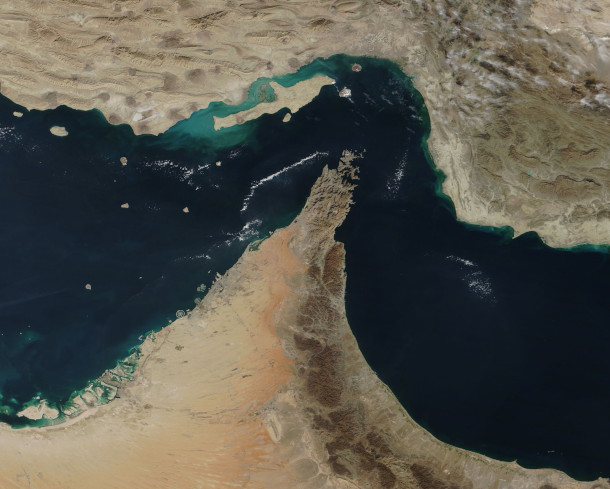
About 20% of the world’s oil is shipped through the Strait of Hormuz, a narrow waterway located in the Persian Gulf that has been closed as a consequence of the US and Israel's war with Iran. (Photo: MODIS Land Rapid Response Team, NASA GSFC, Wikimedia Commons, Public Domain)
The US and Israel’s war with Iran has stopped many ships from passing through the Strait of Hormuz in the Persian Gulf, a vital shipping corridor especially for fossil fuels, leading to global oil and gas price spikes. Lorne Stockman, the research co-director for Oil Change International, discusses with Host Jenni Doering why US consumers are paying through the roof price despite US dominance on oil and gas production, while oil companies cash in. Meanwhile, countries like Spain with significant renewable energy are enjoying price stability.
Transcript
O’NEILL: It’s Living on Earth, I’m Aynsley O’Neill.
DOERING: And I’m Jenni Doering.
The US and Israel’s war with Iran that began in late February has slowed and at times stopped ships from passing through the Strait of Hormuz in the Persian Gulf, a vital shipping corridor especially for fossil fuels. Around 20% of both the world’s oil and liquified natural gas, and about a third of the world’s fertilizer all travel through the Strait, and they’ve all been disrupted amid the war, leading to global oil and gas price spikes. Joining us now to discuss how the US-Israel war against Iran is impacting global energy security is Lorne Stockman, the research co-director for Oil Change International. Welcome back to Living on Earth, Lorne!
STOCKMAN: Great. Thank you. It's great to be here.
DOERING: So although most of the oil that passes through the Strait of Hormuz is meant for Asia, we've seen oil and gas prices soar quite a bit here in the US. How are people across the US being impacted by these high prices?
STOCKMAN: Right, yeah. As many people may have seen, it only really took a few days for us to see price rises at gas stations around the country and of course, as time has gone on, that's become more dramatic. That, of course, is impacting people who are simply trying to get to work, trying to get their kids to school. And over time, that is adding to what was really already an energy affordability crisis going on in the US, which was actually more related to gas and electricity, but gasoline prices have been relatively low for the last couple of years. This is now sort of adding another layer on top of an ongoing energy affordability crisis for many people in the US.
DOERING: Now, Lorne in 2022 the Russia-Ukraine conflict also triggered a cost of living crisis. What happened then and how does the chaos caused by this US and Israel military action against Iran compare?
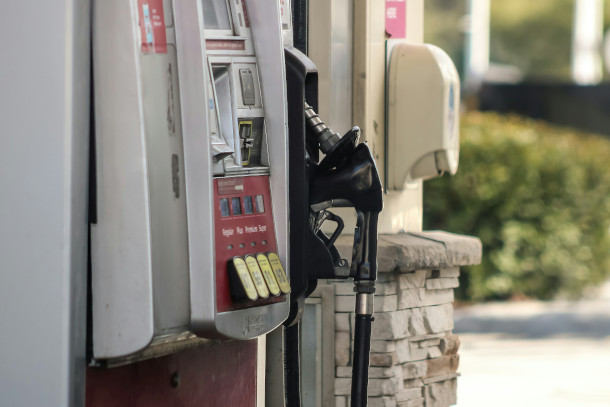
As of March 20, 2026, gas prices have increased approximately a dollar per gallon nationwide as a result of the US and Israel’s war with Iran. (Photo: Dawn McDonald, Unsplash, Unsplash license)
STOCKMAN: Yeah, it's an interesting comparison, actually. So prior to the invasion of Ukraine by Russia in February 2022, there was already a lot of pressure on oil and gas supplies globally. That was partly because the world was coming out of the lockdowns from the COVID pandemic. And so by sort of late 2021 the demand for oil and gas was surging ahead of supply, so we were already seeing some level of supply crunch before Russia invaded Ukraine, and that's why we saw sort of much more dramatic spikes in the oil price than we're actually seeing today. Prior to the US, Israel starting to bomb Iran, the oil market was seen as oversupplied that the growth in demand for oil has actually been slowing in the last year. Supply has been coming on very fast. Outside of the Persian Gulf, mostly in the Americas, in Canada and the US and Brazil and Guyana have been increasing production quite fast and so the market was seen as oversupplied. Now but you know, some people are saying this is the biggest shock, and in some ways it is bigger than in 2022 but the impact depends on how long this goes on.
DOERING: The US produces a lot of oil and gas, exports a lot of that on the global market. Despite that dominance, how vulnerable are we to the pressures on supply caused by this conflict?
STOCKMAN: I think the US is still very vulnerable. It is one of the largest producers and it is exporting into global markets. But that connection to global markets means, when prices rise in the markets that the US is exporting into, the US consumer is now competing with those global markets for that oil and gas. So we saw in 2022, we saw significant increases in the price that US consumers paid for gas to heat their homes in the winter and for electricity, because so much of US electricity, around 40% actually comes from gas fired power plants. So despite being the biggest producer in the world, we're now connected to global markets, and US consumers are in competition with those global markets for the same product. I also think there's an extent to which we have to question whether we'd even be in this situation if the US wasn't a major oil and gas producer. I think there was a certain amount of full security that the Trump administration may have felt in going into this war, which has always been, you know, closing the Strait of Hormuz has always been the nightmare scenario for the oil and gas industry, the oil and gas markets. It's always been the one thing that should be avoided and in fact, the US has spent billions of dollars over the years protecting the Strait of Hormuz and trying to avoid this situation. Now, I think to some extent, this administration felt emboldened by the fact that the US produces more oil and gas than any other country in the world and is an exporter, and perhaps felt that it had some level of security if it did cause a disruption in the Strait. And I think what we're learning is that was a false sense of security, and we're going to see these impacts despite the fact that the US produces all this oil and gas.
DOERING: You know, how does the fossil fuel industry benefit from this volatility and conflict?
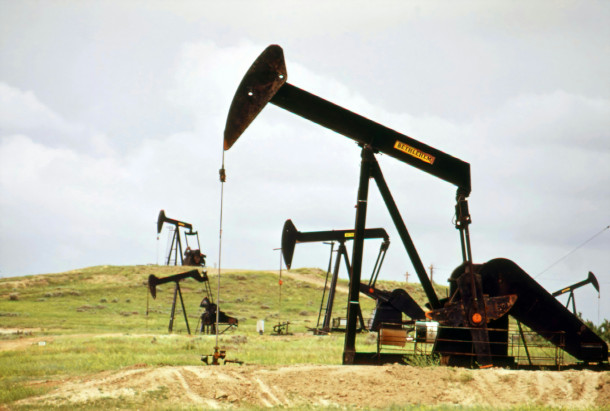
The United States is the biggest oil exporter in the world. The photo shows oil pumpjacks extracting oil in Wyoming. (Photo: Documerica, Unsplash, Unsplash license)
STOCKMAN: So the President made a very insensitive statement on his social media accounts just recently when he said, look, it's great that oil and gas prices are high because the US produces more oil and gas than any other country, and so we're making lots of money, but when we look at who is making the money and who is paying, oil companies are making a lot more money, but we are all paying for that. We're the source of those extra revenues, right? We're paying the price. We saw in 2022 that with the oil prices staying high for much of the year, oil companies got a massive windfall, had record profits, my organization, Oil Change International, we actually did an analysis just of the top American companies, and they received a windfall in 2022 of around $200 billion. In the current crisis, it's a little bit early to say a lot depends on how long it goes on for and how high prices go. But just recently, the Department of Energy reassessed the oil price for 2026 and they raised their expectation for average oil prices from 53 to $73 per barrel, that's a $20 difference.
DOERING: Wow, that's huge.
STOCKMAN: Yeah, they also said, you know, we might have to reassess this, depending on how long this goes on, right? So it could be a lot worse. And just based on that $20 difference, US crude oil producers are in line to make an additional 100 billion dollars over 2026 just on that average $20 difference. That also doesn't include the gas and the natural gas liquids, the other things that they produce from oil and gas wells. So that's just based on the crude oil price. So they're in line to make a massive windfall. In Europe and in the UK in 2022 those governments imposed a windfall tax on the oil and gas industry because they saw that their citizens were struggling with a cost of living crisis that was mainly based in the price of energy, the price of oil and gas. The US hasn't done that.
DOERING: So how do we break this cycle of vulnerability to oil and gas prices rising, falling, rising again. How do we get out of this?
STOCKMAN: Well, we reduce our use of oil and gas, right? And that's been happening. We got this shock in 2022 and certainly in Europe and in some other parts of the world, we have seen significant progress in an acceleration in installations of wind and solar and storage. In Europe, the generation of renewable energy shot up 35% from 2022 to 2024 where we have the latest data. I believe in 2025 it's increased even more. So we're actually seeing, you know, particularly the countries that were hit hard in 2022 are actually just that little bit less reliant already, and I think this will reinforce that even more. Unfortunately, the country that is not going in that direction it's turned around and going in the opposite direction is the United States. This administration is all out on fossil fuels, where gas contributes about 40% of electricity generation. It's really become the sort of price setter in the electricity market in the US. This administration has attacked renewable energy projects, you know, I'm thinking specifically of, you know, the big offshore wind projects that were being built off the East Coast, making sort of illegal attacks that have now been reversed, so slowing those projects down, adding to their costs, and it seems to be intent on doing everything it can to slow down affordable renewable energy and promote fossil fuels. But the rest of the world took that signal pretty seriously in 2022 and I believe this situation is only going to reinforce that momentum away from oil and gas and towards cleaner and cheaper and more secure energy.
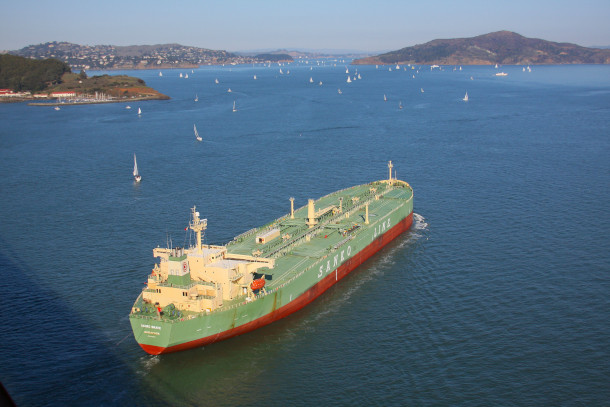
According to market research firm Rystad Energy, American crude oil producers could make an additional 100 billion dollars over 2026 due to rises in prices. (Photo: the_tahoe_guy from San Jose, California, USA, Wikimedia Commons, CC BY 2.0)
DOERING: And to what extent is an economy powered by renewables less vulnerable to this volatility? And why would that be?
STOCKMAN: Well, if you're not reliant on importing fossil fuels, then when these situations come up and the prices spike, you're going to benefit. I mean, actually, it's been quite interesting to look at Spain, you know, we've seen just in the last couple of weeks, electricity prices spiking in some of the European economies, but Spain, which actually has the highest renewable energy penetration on its grid, its electricity prices have been much more stable in the last week or so, with much less volatility and much lower spikes. And that's been noted by some of the other European countries that Spain has managed to kind of disconnect itself to some extent from these crises that we're seeing. So you know, there's a very clear connection between lowering the amount of gas that's flowing into the electricity system and, you know, experiencing lower volatility when these kind of crises take hold.
DOERING: Lorne Stockman is the research co-director for Oil Change International. Thank you so much for joining us today.
STOCKMAN: Thank you.
Links
Inside Climate News | “How Will the War in Iran Affect Your Utility Bills?”
Keep up with live updates on the US and Israel’s war with Iran
Living on Earth wants to hear from you!
Living on Earth
62 Calef Highway, Suite 212
Lee, NH 03861
Telephone: 617-287-4121
E-mail: comments@loe.org
Newsletter [Click here]
Donate to Living on Earth!
Living on Earth is an independent media program and relies entirely on contributions from listeners and institutions supporting public service. Please donate now to preserve an independent environmental voice.
NewsletterLiving on Earth offers a weekly delivery of the show's rundown to your mailbox. Sign up for our newsletter today!
 Sailors For The Sea: Be the change you want to sea.
 The Grantham Foundation for the Protection of the Environment: Committed to protecting and improving the health of the global environment.
 Contribute to Living on Earth and receive, as our gift to you, an archival print of one of Mark Seth Lender's extraordinary wildlife photographs. Follow the link to see Mark's current collection of photographs.
 Buy a signed copy of Mark Seth Lender's book Smeagull the Seagull & support Living on Earth
© Copyright World Media Foundation. All Rights Reserved
Home | Contact | RSS | Donate | Newsletter